
Is the Grass really Greener?

A few ideas for a more resilient landscape
How did the expectation of a well-manicured and lush lawn become reality? This blog post explores the history of the American Lawn and dives into best practices for a more ecological and resilient yard.

As the weather started warming up in Southern Maine, the familiar background hum of leaf blowers and lawn mowers began to fill my home. Every day, a different neighbor seems to be doing something to correct and manicure their lawn so it meets their aesthetic goals. It serves as an auditory reminder that longer and warmer days are back.
I grew up in a small suburban town and my mother took great care of the garden and our yard. It was wonderful to be able to sit outside in the grass and do my work in the cool shade. I took having a green outdoor space for granted and didn't realize how much I valued and used my family's lawn until I moved to places without access to a backyard. The shift in weather and my own shift in access to private greenspace got me wondering about the evolutions of landcare.
The history of grass lawns in the United States
In the 1600’s, settlers brought livestock. These animals loved the native grass and eventually depleted it. To feed their animals, these settlers planted grasses from their home countries - such as Kentucky bluegrass (Native to Europe, North Africa, and North Asia) - which is the grass that dominates our landscapes today.
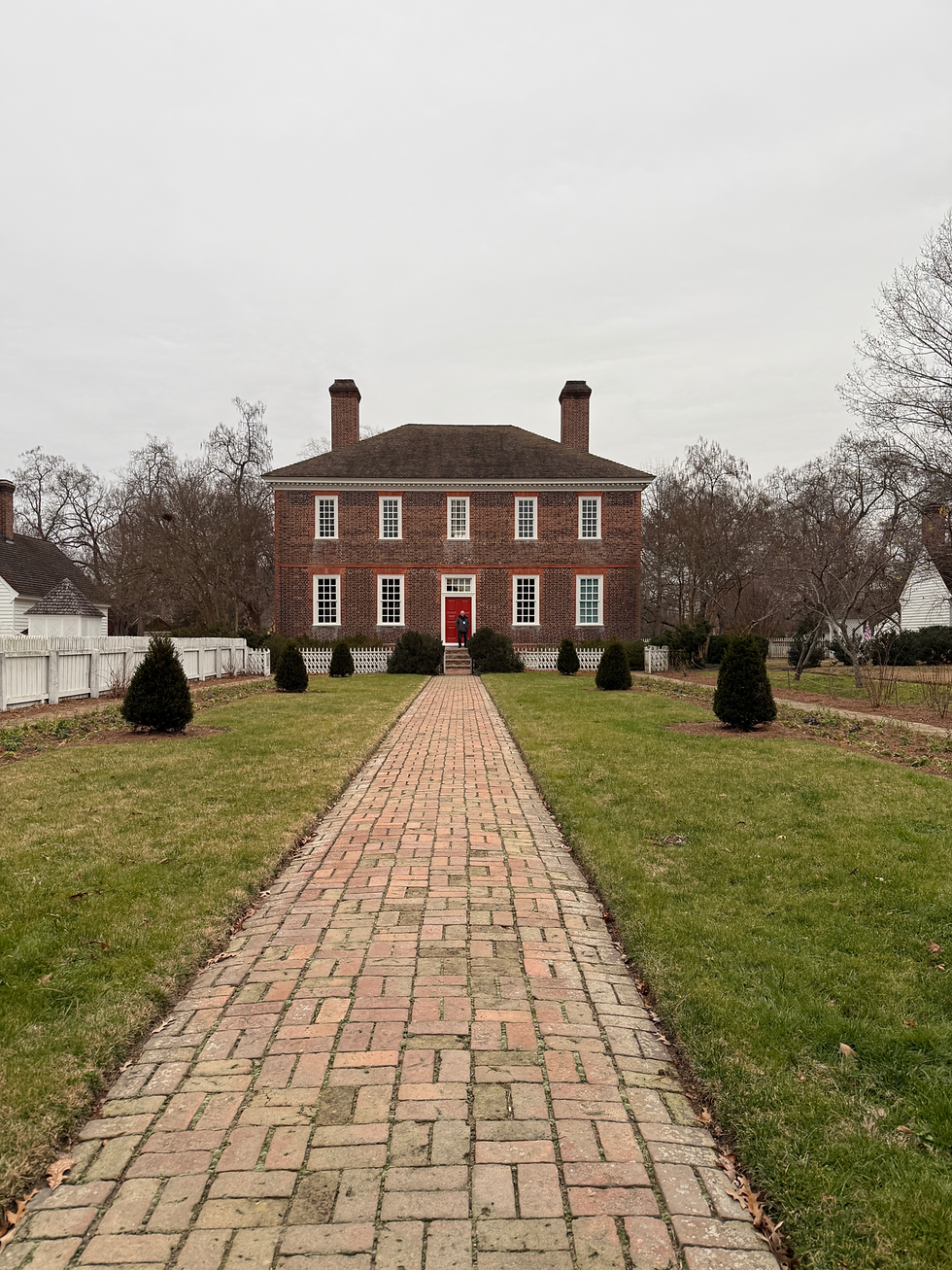
Lawns are now a defining feature of American towns and suburbs, but that hasn’t always been the case. In England, early lawns were a clear status symbol as they were large stretches of grass that served no agricultural purpose and could only be maintained by the wealthy. Before the invention of the lawn mower, grass had to be cut by hand. Expansive, neatly kept lawns signaled that a landowner had access to significant labor, which was often enslaved people.
The idea of manicured green space was brought to America by English colonists, and over the past 250 years, the lawn gradually became a cultural standard in the United States. What began as a symbol of wealth and status eventually evolved into an expected feature of everyday residential landscapes. By the late 1800s, homeowners were encouraged to view a perfect lawn as a reflection of good citizenship (helped, of course, by the invention of the lawn mower). As suburban communities expanded in the early 20th century, maintaining a lawn became not only a practical task but also a popular leisure activity, further reinforcing the lawn as a symbol of prosperity and social status. By the 1950s, these ideals had become deeply ingrained in American culture, and a large, green lawn was widely regarded as an essential component of the “American Dream.”

The Environmental Impact of Lawns
When something is forced to grow where it hasn't adapted to live (such as grass), it is not going to thrive. A widely accepted solution for lackluster and patchy lawns would be fertilizers and lots and lots of water.

A plant native to an area has evolved over millennia and developed relationships with other species - from mammals and pollinating insects to the microbiome of the soil. Often a mutual or commensal relationship is created between native species. The plants need the pollinators to reproduce just as much as the pollinators need the plants to survive. Maine has 270 species of native bees, 120 species of native butterflies, 500-800 species of native moth, and 292 species of native birds - all reliant on native plants for food, shelter, and to complete their life cycles.
Lawns are the largest single 'crop' in the United States, but they do not offer food or shelter for insects or animals. Additionally, grass is the most irrigated plant in the country. (Growing up, I had a neighbor who would run their sprinklers every morning at 6:45am and every afternoon at 4:45pm - rain or shine!). In places where water resources are already scarce, like the Southwest, and in times of drought here in Northern New England - residential irrigation has begun to be regulated to save water for critical needs.
To take care of our lawns, we often use fertilizer seasonally to top off nutrients in the soil. When it rains, fertilizers can wash away and make their way into our water systems - negatively impacting ecosystems miles away from where they were used. Other than causing chemical contamination, fertilizers may also cause eutrophication in bodies of water. Eutrophication creates an imbalance and eventual death of the aquatic ecosystem.
As of the last century, lawns require continuous maintenance from loud machines. Lawn mowers, leaf blowers, and trimmers are often powered by a combustion motor, creating excess noise, smell, and contributing to greenhouse gas emissions. Elsewhere in the country, landcare equipment is also being regulated in order to reduce pollution.

While a student at Skidmore College, my environmental studies professors would seem miffed when the maintenance team would ride around the college green on their mowers. Not only did it prevent us from having class outside, but it seemed to be constant and unnecessary.
No Mow May, a popular conservation movement, originated in the United Kingdom. Although it is a wonderful way to raise environmental awareness about pollinators, it doesn't serve the same purpose in America as it does in the UK. This is because the grass used for lawns in the United States is largely not native. Therefore, the critters that would benefit from ‘No Mow May’ aren’t present on our lawns.
If you would like to do something for the creatures who call your lawn home, consider leaving the ‘dead’ plants and leaves on your lawn until the summertime. Many insects over-winter in the dead stems of plants or within the leaf litter.
Designing a Landscape
With concerning (and expensive) management practices and few ecological benefits, it's no wonder why so many households in Southern Maine are ripping up their grass and creating native plant gardens.
When assessing your lawn for an ecological remodel, it is important to identify what you’d like to gain from this outdoor space. Grass is a wonderful place to play, gather, and relax and could still have its place in your yard - just maybe not taking up so much space. Additionally, just because it's not-native doesn't mean it should be removed - as long as the plant is non-invasive.

When making a plan for your new landscape, it is important to remember that diverse environments support production. The good news is that if you embark on this journey you can transition your yard from a monoculture (grass) to a polyculture. Maximizing biodiversity requires creating diverse habitat types that are connected across the landscape. The design of these habitats is also important: compact patches of native vegetation generally provide more ecological value than long, linear plantings because they contain less edge habitat. Since many insects and animals thrive in protected interior areas, reducing hard edges can minimize environmental stressors and create more suitable conditions for wildlife. The best way to do this is to consider landscape mosaics. If you choose to create a landscape mosaic in your yard, keep in mind how the critters can get from one spot to the next. If it seems like there is a lot of barren (grass) space between native plant hubs, consider creating ‘stepping stones’, or patches of habitat that are arranged in relatively close proximity to the next native plant island.
Once you have decided what areas of your lawn need to be de-grassed it's time to begin.

The best way to remove grass is by smothering it. To do this you will need cardboard and mulch. Trim the grass as low as your mower will allow and cover the area with cardboard - layered with mulch on top. It is best to leave this for a few months to ensure the grass underneath is dead. If it isn't totally dead, it will come back to haunt you as an unwanted weed later on. However, if you are impatient like me, cut holes into the cardboard where you'd like to plant.
When picking native plants to use in your new garden, it's important to ensure the plants you are choosing are truly native plants to Southern Maine. A great resource to use when making your selection is the Maine Audubon Plant Finder or the Native Plant Trust (we are in planting zone 5). When perusing these websites, it would be helpful to know what type of soil you would be planting in. The easiest way to find this out is by sticking your hands in the dirt. The way the dirt feels when you roll it around in your hand will give you a good idea of what type of soil it is. This USDA flow diagram is a great resource on deducing what type of soil you have. Maine generally has acidic, nutrient poor soils - but remember, native plants know this and tend to prefer these types of conditions. Don't forget that planting a variety of different species will help maximize the biodiversity and ecosystem function of your lawn.
Earlier I mentioned that when a non-native plant is forced to grow outside of its native habitat, it is not going to thrive and will require attention, maintenance, and resources for its survival - just like your current grass lawn.
The good news is that native plants do not require this type of attention. Native plants need minimal care after they have been established in a landscape. Just like other new plant, natives will require a little extra watering when they are first planted/transplanted and still establishing their roots into the soil. Furthermore, to increase the chances of a successful implementation of a native garden, the natural growth cycle of the species being planted should be considered (this is usually after the last frost date in spring and before the first frost date in autumn).
Pest Management
When I start talking about how amazing native gardens are and the downfalls of grass, there is usually someone who mentions the pests that may emerge from a wilder landscape. Interestingly, by increasing the number of native plants in your garden, you are creating an environment that supports natural predators of many common backyard pests.
If you're looking to strike a balance between supporting biodiversity and minimizing nuisance wildlife, here are some practical tips:

If you notice standing water, dump it out. Still water serves as a breeding ground for mosquitos.
When creating your native plant garden remove all invasive plants before beginning to plant.
Sign up for a walk with state horticulturalist Gary Fish on 06/23 to learn how to identify some common invasive species in Yarmouth
Learn to identify common pests and the best way to eradicate them without chemicals.
Ensure trash and compost are properly covered.
Seal openings beneath decks, sheds, and porches to discourage animals from taking residence.
Keep brush piles and dense vegetation away from the home foundation to reduce hiding places near your house.
Resiliency

When it comes to natural disasters, Maine is situated in a wonderful spot geographically. Winter storms, extreme temperature and floods are our top threats. However, in the United States, floods cause more property loss and death than wildfires, tornados, and earthquakes combined. This is partly because we (humans) have modified our landscapes to fit our needs. Flooding is a needed and natural function. Flooding recharges groundwater repositories, fills wetlands, transfers nutrients through the soil, and connects aquatic and terrestrial habitats (like vernal pools). In the natural world, disturbances are a vital part of ecological function. Many engineered landscapes are intended to mitigate flooding; however, their effectiveness is limited to the conditions for which they were designed. As climate variability increases, these systems are increasingly being pushed beyond their design capacity, reducing their ability to withstand environmental pressures.

Even just by switching your landscape from a monoculture (lawn) to a polyculture (diverse native design) you are increasing the capacity for the land to absorb heavy rains. Additionally, green stormwater infrastructure (GSI) practices, such as rain gardens, can capture, filter, and infiltrate stormwater runoff. Rain gardens have the potential to minimize flooding on your property - especially if they are located upstream to where water usually floods during heavy rainfall or snowmelt. If you choose to install a rain garden it is important to choose native plants that can withstand periodic flooding AND dry periods. Having a proper evaluation prior to installing a rain garden is important to ensure it is an appropriate size and in the right location. Installing a rain garden in the wrong soil will lead to infiltration problems later on.
Another GSI to consider would be a permeable driveway. Unlike traditional paved surfaces, a permeable driveway allows rainwater to pass through the material and infiltrate the soil beneath it. This helps to reduce the amount of runoff entering storm drains while also helping to recharge groundwater and lessen the risk of localized flooding.
Lawn Story Short
Lawns are more than just the default landscape. Lawns are a product of history, cultural values, and long-standing design choices that generally go unquestioned. While they can provide space for recreation and gathering, their ecological limitations are becoming harder to ignore as environmental pressures rise.
Shifting away from a grass-dominated yard creates an opportunity for a more adaptive, resilient landscape that works with natural systems rather than against them. By incorporating native plants, diversifying habitat types, and integrating green infrastructure practices - homeowners can transform their outdoor spaces into environments that support biodiversity, improve water management, and reduce environmental strain.
Ultimately, rethinking the modern lawn is not about abandoning beauty or usability - it is about expanding what a “healthy” yard can look like. A more ecologically informed landscape is not only possible, but increasingly necessary.

Image found throughout this article were either captured by Christy Phillips or sourced from The Met.


